
Young Men and Porn: Scott Galloway's Take
5 min read
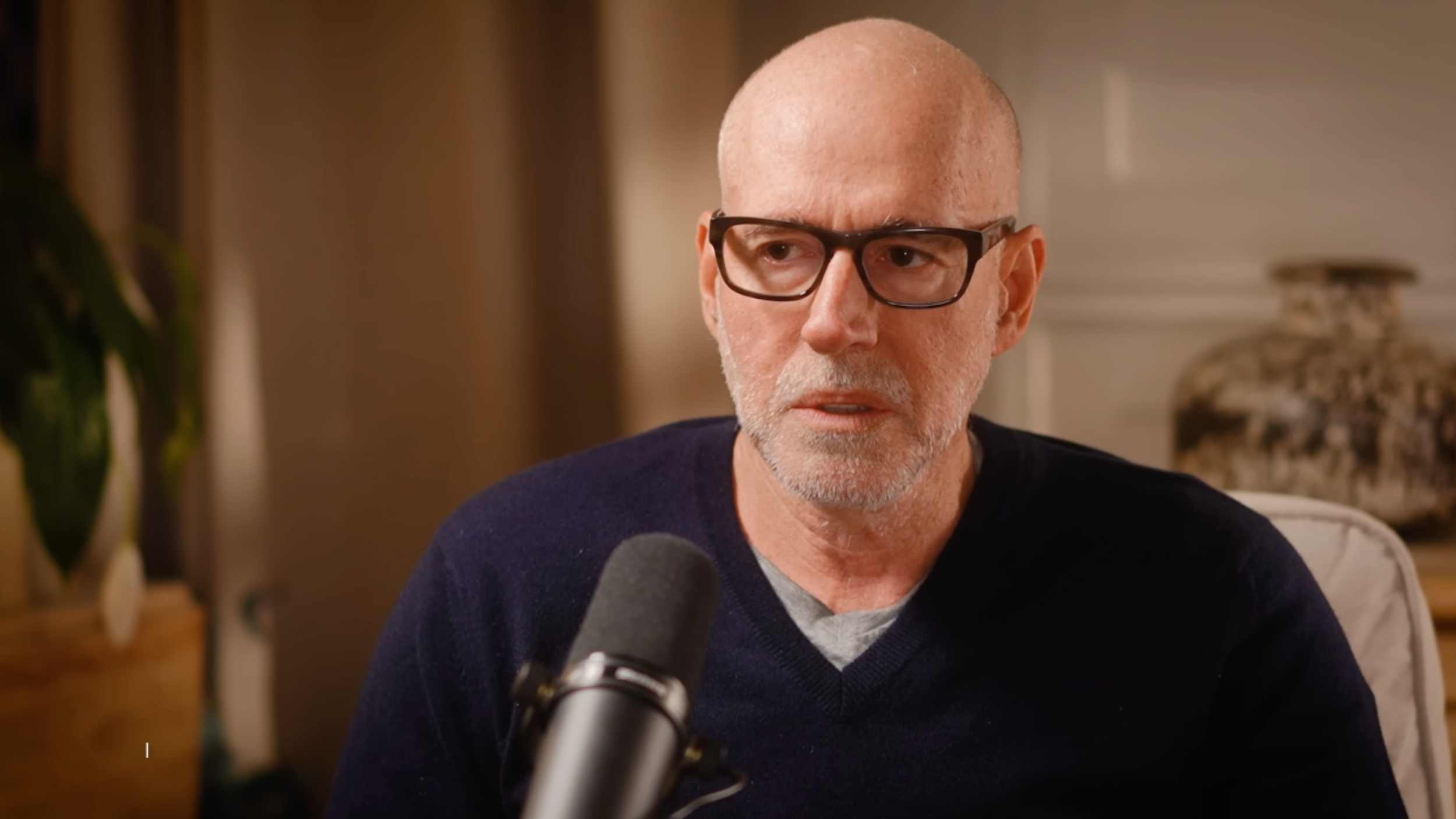
Some thoughts on Scott Galloway's conversation with Chris Williamson on Modern Wisdom and why it's basically the reason I do what I do.
I built an app to help men quit porn, so you'd assume I spend most of my time thinking about porn. I don't. I spend it thinking about the thing underneath it: a whole generation of young men quietly checking out of real life. So when Scott Galloway sat down with Chris Williamson and laid out, over about two hours, the clearest map of that problem I've heard, I had to write something.
To be clear up front: Galloway's the one who's done the work here, not me. He's the NYU professor, the serial founder, the guy with the data and a book on exactly this (Notes on Being a Man). I'm just a founder who found his framing clarifying. So this is his argument - these are my takeaways from it.
The crisis is real, and it's measurable
Galloway doesn't lead with feelings. He leads with numbers. College enrollment sits at roughly 60/40 in favour of women, and it's drifting further that way, not back - men also drop out at higher rates, so the graduation gap is worse than the enrollment gap. He points to a generation of men who are lonelier, less likely to be in a relationship, and less economically viable than the men before them.
The reframe that stuck with me: he argues men need relationships more than women do, not less. His read of the data is that when a woman lacks a partner, she tends to pour that energy back into friendships and work. A lot of men pour it into nothing productive, they go deep online, get more prone to conspiracy and substances, and drift. He cites the stat that a man who isn't partnered or cohabiting by 30 has roughly a one-in-three shot of becoming a substance abuser. The point isn't to panic anyone. It's that the stakes here are real, and they're physical.
And he's careful to frame the whole thing as a societal problem, not a grievance, his line is that women don't keep thriving and the country doesn't keep prospering while young men are flailing. It's a collective fix, not a zero-sum one.
The screen is eating the venue
This is where it got personal for the work I do.
Galloway's argument: young men have been handed a low-friction, low-risk facsimile of a life - porn, gaming, infinite feeds, at the exact moment the real-world venues for meeting people are vanishing. Work has gone remote. Pubs and clubs are closing. Fewer people go to church or join the third places where you used to bump into strangers and demonstrate you're worth knowing.
He's blunt about porn's role in that. He says, more or less, that if he'd had on-demand, lifelike porn calibrated to his every preference at eighteen, he isn't sure he'd have bothered showing up to campus at all. What dragged him out the door to class, to parties, to taking the terrifying risk of talking to a stranger, was being a young man with a lot of drive and nowhere to point it but the real world.
Then he names the machine. A huge share of the stock market by value is now a handful of companies in social, online, and AI and a big part of their business is keeping you engaged by enraging you and isolating you. As he puts it, we've managed to connec-t shareholder value to sequestering young men from each other. The incentive of the most powerful companies on earth is for you to stay home, stay angry, and stay on the screen.

But the answer isn't "just quit" and here's where I push back
Here's the part most people skip, and the part that maps closest onto why I built what I built.
Galloway does not tell men to white-knuckle their way to abstinence. He says, flatly, that you can't realistically tell a young man to just cut porn out. What you can do is modulate it so the fire of being young pushes you toward real life instead of letting it leak away.
On the big idea, I'm completely with him. The drive isn't the enemy. The drive is the engine. He uses the image of fire: left loose, it burns down a forest; put it in an engine with spark plugs, and it drives you forward. Porn is just the cheap, frictionless place that fire drains into. Aim it at the real world instead - approach someone, take the risk, survive the no and the same energy becomes fuel.
This is the one place I'll respectfully disagree with him. He's the expert and I'm not, so weigh that how you like but I don't buy that you can't ask a young man to cut porn out. I think you can. I watch men do it.
The distinction that matters: cutting out porn is not the same as cutting out the drive. You keep the fire. You just stop pouring it into a screen. The reason "just quit" usually fails isn't that it's impossible, it's that men try to quit into a vacuum, with nothing to reach for at 11pm when the urge hits and the room's empty. Take the porn away and put nothing in its place, and of course you relapse.
So you don't leave a hole. You replace it. The gym, a cold shower, a real conversation, a project, a walk, the thing you've been putting off - healthier activities that hand you a version of the reward without the wreckage. Modulating is a fine first gear. But full freedom from it is genuinely on the table, and I'd rather aim a man at that than tell him a managed habit is the best he gets.
The problem was never your sex drive. It's the thing standing in for a real life. Galloway and I agree on that completely, we just disagree on how far you can take a man from there.
A code worth having
His prescription for what to point all that energy at is the best part of the conversation.
He argues a lot of young men are "codeless" - no principles to hold onto, no framework for the hundred small decisions a day. And that masculinity, done right, can be that code, as long as it's aspirational. Not a list of don'ts. A thing to become.
Three legs hold it up. Provider: have a plan, be responsible, be someone who could support people, not a baller, just dependable. Protector: lean into the strength and steadiness that make the people around you feel safe. Procreator: embrace the drive rather than being ashamed of it, and channel it well. And the sum of all three is what he calls surplus value - the point where you put more into the world than you take out of it. That, he says, is when a male becomes a man. It has nothing to do with age.
The bit I didn't expect from someone this blunt: kindness as a secret weapon. Not niceness as a tactic to get something - actual kindness, the plant-trees-you'll-never-sit-under kind. He's adamant the research backs it. Bad-boy energy can win the short game; kindness wins the long one, and women clock the difference between a man being nice at them and a man who's simply kind.
Underneath everything, one repeated instruction: get comfortable with no. Every yes worth having sat behind a pile of rejections. The thing we've trained young men to do - never risk it unless it's a sure thing, is precisely the thing keeping them stuck on the couch.
Why this is the whole point
I find this hopeful, and here's why. Nothing in it says young men are broken. It says they've been pulled out of the game, by economics, by vanished third places, by companies that profit when you stay isolated and that getting back in is a set of moves you can actually learn. Take the risk. Build the plan. Be kind on purpose. Point the fire at something real.
Quitting porn - the thing I work on every day, was never the finish line. It's the first move. It's clearing out the cheap substitute so the drive finally has somewhere better to go.
Go watch the full conversation; it's long and it's worth it. And if any of it lands, don't just sit with the insight. Do one thing with it today. Apparently that's the entire difference between a male and a man. I'm inclined to believe him.
These are my reflections on Scott Galloway's appearance on Modern Wisdom with Chris Williamson - his arguments and his data, filtered through my own take. I'm not a researcher or a clinician, just a founder who cares about this. If you're struggling with your mental health, please reach out to a professional.