
Why Can't I Stop Watching Porn? Dr. K Explains
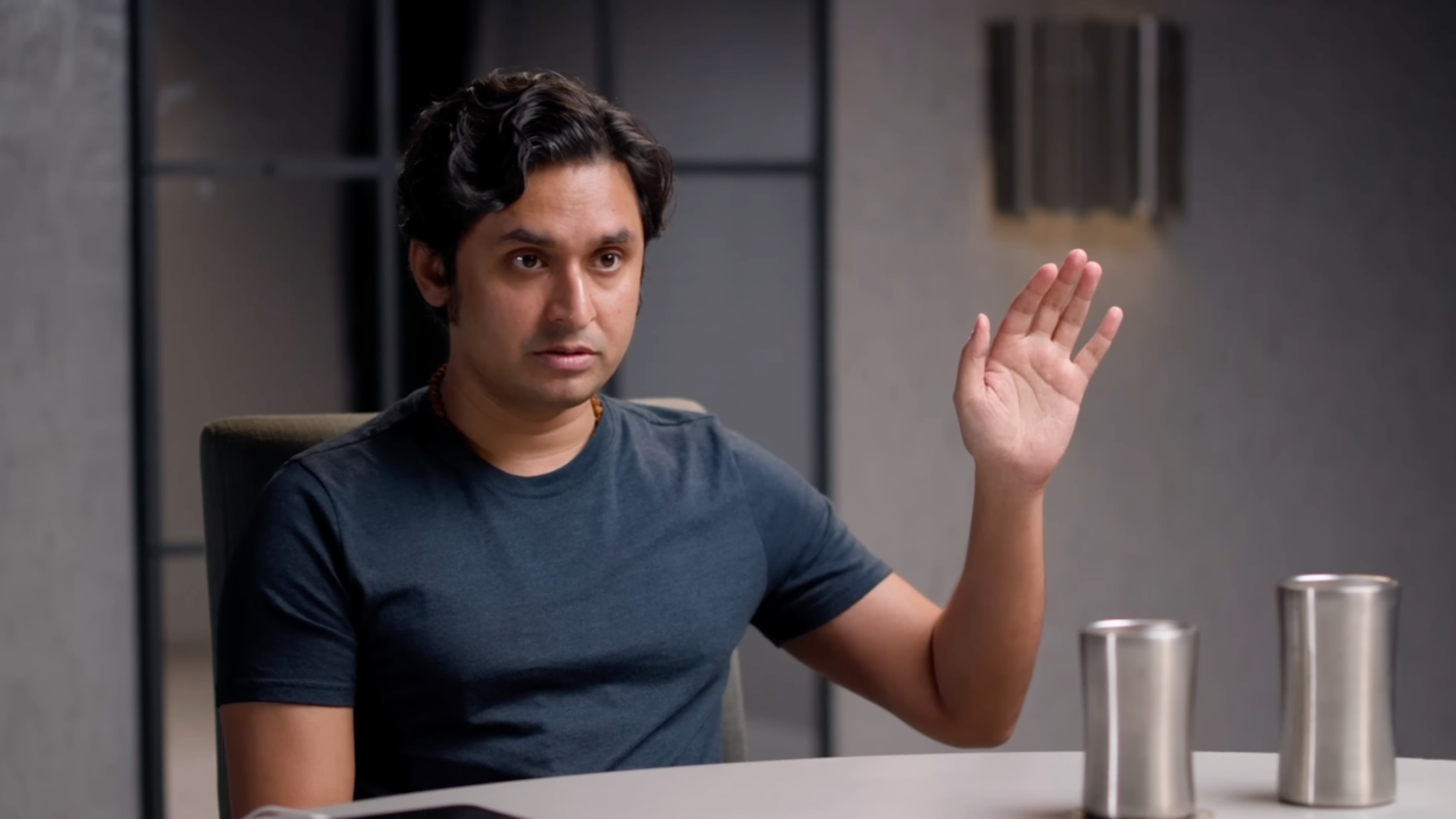
Before we start: I'm not a doctor, a psychologist, or a psychiatrist — and I don't pretend to be. I lean on the real experts, people like Dr. K, for the actual guidance. Everything I share here is my take and my opinion, nothing more. If porn is hurting your health, see a doctor; if it's hurting your head, see a psychologist.
I'll be straight about why this post exists: the conversation I'm about to walk through is the reason VandrMen exists at all.
I'd been circling the problem for years — the quiet way porn pulls young men out of their own lives — without doing much about it. Then I sat through two hours of Dr. K (Alok Kanojia, the Harvard-trained psychiatrist behind Healthy Gamer) and Steven Bartlett on The Diary of a CEO, and he put words to the thing I'd never quite been able to name. People assume I think about porn all day. I don't. I think about the hole it fills — and this was the episode that finally described it. By the time it ended, I'd stopped wondering whether someone should build a way out, and started building one. That's when Vandr went from an idea I carried around to a company I was actually starting.
So I want to walk through the parts that tipped me over the edge, and where they line up with what we ended up building.
One stance, because it colours everything: Vandr is an anti-porn app. I'm not chasing a "balanced" amount of porn — I think it's worth quitting outright, and I read this episode through that lens.
It was never really about the porn
Dr. K's core argument is that the porn isn't the disease. It's the symptom. Addiction grows, he says, in the space where something's missing — and right now, a lot is missing. Dating is harder. Real connection is scarcer. There's a part of the brain getting starved, and porn rushes in to fill it.
The image that stuck with me was junk food. Fill your stomach with processed calories and you won't crave broccoli — you're full, just not nourished. Porn does the same thing with connection. It hands you a thin slice of what your brain wants, and once that box is ticked, the drive to go get the real thing — the relationship, the intimacy, the effort that comes with it — quietly switches off. You're satisfied enough to stop looking, but none of the things you were actually hungry for got fed.
That's the trap in one line: porn is filling you and starving you at the same time.
What it's doing in there
Then the neuroscience, and this was the part I hadn't heard framed this way. Dr. K's point is that porn works as an emotional painkiller. Turn it on and the fear-and-anxiety centre of your brain goes quiet — almost aromatherapy for a stressed mind. Which is why, he notes, plenty of heavy users aren't even masturbating most of the time. They've got it running in the background to keep the bad feelings turned down.
On top of that sits the dopamine. Every hit of pleasure, he explains, quietly buys you the craving and the motivation to come back tomorrow — they're wired together, and you can't take one without the others. So porn becomes a calorie-dense shortcut: a huge dopamine spike and an off-switch for hard emotions, in one tab. Your brain, built above all to be efficient, learns that nothing else comes close. Real life goes grey next to it — not because something's wrong with you, but because you've trained your reward system to expect something it was never built for.
And it doesn't hold still. The same hit lands softer over time, so the volume creeps up — more tabs, more novelty, often more extreme — just to feel what you used to feel. That's tolerance, and it's the quiet engine under every "how did I end up here" story.

Why white-knuckling backfires
Here's the counterintuitive bit, and it matters, because at first it sounds like an argument against quitting. It isn't.
Dr. K says repeatedly resisting an urge and then caving is one of the worst things you can do. His example is opioid withdrawal: resist, resist, resist, then give in at the peak, and your body learns the exact level of pain it has to inflict to get what it wants — so next time it jumps straight there. The cravings escalate. Lose enough of those battles and you lose the war.
But that's not a case for giving up. It's a case for quitting cleanly. His other line is that once you decide not to use, you die on that hill — no negotiation. Don't get into the daily "should I, shouldn't I" haggle you'll eventually lose. Decide once, commit, and ride the craving all the way to the far side, where it burns out on its own.
And his reframe of willpower is the most motivating thing in the episode. That tug-of-war in your head — should I, shouldn't I — that is willpower, in real time. You're not failing while you're fighting; the fighting is the win. The addiction only takes the round when you stop fighting and quietly leave the ring. So the goal isn't to never feel the pull. It's to never leave the ring.
The tools that move the needle
The practical stuff maps almost one-to-one onto how I think about this:
Urge surfing. You don't conquer a craving, you outlast it. An urge rises, peaks, and falls on its own if you don't feed it — like hunger that passes when you don't eat. Knowing that is half the battle.
A practised second solution. You can't invent a coping tool mid-craving; you need it ready before the fire starts. Dr. K uses alternate-nostril breathing — a few minutes a day so it's loaded when the urge hits. The whole reason addiction wins, he says, is that we have one solution to one problem. Build a second one and everything shifts.
Kill the access. Log out of the devices, get it off the easy path. The habit lives in the cracks of your day, so close the cracks.
If those sound like a streak tracker, an SOS button, and a breathwork tool — yeah. Not a coincidence. It's the same toolkit, and it's why I'm confident the answer was never willpower theatre.
The "why" is the whole game
This was the line I'll keep coming back to. Dr. K says the two strongest predictors of porn addiction are a sense of meaninglessness and a life full of empty, unaccounted-for hours. You get home, nothing's pulling at you, no one's answering the texts — so you might as well. The fix isn't more discipline. It's a reason. Overcoming an addiction, he says, requires a why, and "because it's bad for me" has never moved anyone.
He's blunt about a specific version of this: quitting for your partner tends to fail, because keeping someone else happy isn't really your why — and the addict's brain just decides that if she doesn't find out, it doesn't count. The reason has to be yours.
And there's a flip side I love, the most hopeful idea in the episode: people don't grind their way out of porn so much as outgrow it. They beat it when they finally have no time for it — when the empty hours are full of something they care about. Build a life with enough pull in it, and the habit gets crowded out.
Where I land
Two things before I let you go. The first isn't a divergence at all — it's where I connect with Dr. K most. He keeps circling back to the idea that porn addiction has a spiritual dimension: that a lot of what sits underneath it is emptiness, a sense your life isn't for anything — and that beating it isn't only a behaviour change but a kind of growing-up of the spirit, the thing that finally makes you feel solid in yourself. I know that sounds woo to some people. It doesn't to me. The men I watch actually get free aren't the ones who just installed a blocker — they're the ones who found something to live for, and the porn fell away as a side effect of becoming someone. Call it purpose, call it dharma, call it spiritual growth: that part lands for me completely.
Where I do step away from the episode is on the quitting itself, and this is the founder talking rather than the layman: I think you can quit porn. Not schedule it, not trim it down to an hour a day — quit it. The scheduling stuff is a fine on-ramp, but the destination is zero. And the spiritual work and the practical work aren't two separate projects — the "why" Dr. K talks about is the same engine that gets you to zero. Fill the empty hours with a life worth protecting and the porn loses its job.
That's the whole thing. Quitting porn was never the finish line. It's clearing out the painkiller so you've got a reason to go build something real.
That's what this episode did for me — it pointed at the empty space, and the thing I built to fill mine was VandrMen. Go watch the full conversation; it's long and it earns it. And if it lands, don't just nod along — do one thing with it today. Mine turned into a company.
These are my takeaways from Dr. K's appearance on The Diary of a CEO with Steven Bartlett — his expertise, my reflections. I'm not a clinician, just a founder who cares about this. If porn use is affecting your physical or mental health, please talk to a doctor or a psychologist. You don't have to do this alone.